Form check
Push-up form check: depth, body line and lockout.
A push-up is a moving plank. Almost everything that goes wrong with it is either the arms not going far enough or the body not staying in one line. Here is what a coach watches, with the words the coach in Loopform AI says when it sees each fault.
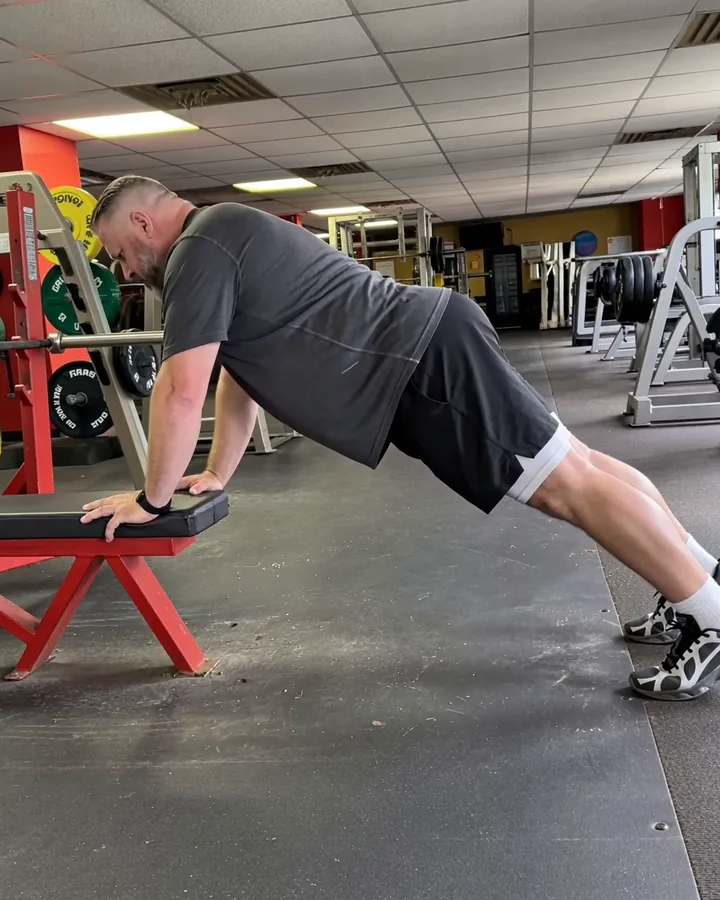
What a good rep looks like
- Depth. Elbows bend to about a right angle, or the chest comes within a fist of the floor. The common test standard is the upper arm reaching parallel to the ground.
- Body line. Shoulders, hips and ankles stay on one straight line from the top of the rep to the bottom. Squeeze the glutes and brace the stomach before you start and the line takes care of itself.
- Lockout. Arms straight at the top of every rep. A rep that starts its next descent before the elbows straighten is a partial, and a coach does not count it.
- Hands and elbows. Hands under the shoulders or a little wider, elbows at roughly forty-five degrees from the body rather than flared straight out.
The three faults and what the coach says
Short reps
The elbows never bent far enough and the chest stayed high. The rep counts, but half a push-up builds half the strength. If full depth is not there yet, put your hands on a bench or a counter and get full depth there; that beats shallow reps on the floor every time.
The coach says: "Chest lower on the next one." · "Get the chest closer to the floor." · "That one was short. All the way down."
Hips sagging
The hips drop below the line from shoulders to ankles, usually as the set gets hard. The lower back takes the load. Squeeze the glutes, pull the belly button up, and if the line still breaks, drop to the knees or an incline rather than keep sagging.
The coach says: "Hips are sagging. Squeeze your glutes." · "Tighten the core, hips up in line." · "Brace. You're dipping through the middle."
Hips piked
The opposite: the hips rise above the line and the body folds into a tent. It makes the rep easier by shortening the lever, which is why it creeps in. Think about pushing the floor away while keeping the hips down, and look slightly ahead of your hands rather than at your feet.
The coach says: "Hips too high. Flatten out." · "Drop the hips, body in one line." · "You're piking. Bring the hips down."
How to check yourself
- Lay the phone on the floor, propped up a little, 6 to 8 feet to your side, and get into your push-up side-on to it, head to feet in frame. The filming guide has the details.
- Watch the hips, not the arms. If you can hold a ruler from shoulder to ankle in your head, the hips should never leave it.
- Count only the reps that lock out. The number is usually smaller than you thought, and more honest.
Variations the same rules cover
Floor push-up, incline push-up on a bench or counter, knee push-up. On the knees the line runs from shoulders to knees instead of ankles, and the coach switches to that line on its own. Start on an incline if the floor is not there yet; a full-depth incline rep is worth more than a short floor rep.
How Loopform AI coaches it
Side-on to the phone on the floor, the coach counts each rep when the arms lock out again, reads depth from the elbow angle at the bottom, and watches how far the hip sits from the shoulder-to-ankle line at the top and at the bottom of every rep. It tells you if you were short, if the hips sagged or piked, and says "that's eight" when the rep was clean. If you drop to your knees mid-set, it notices, says so once, and keeps counting.
Rep counting and form cues are free, with or without a subscription. Video never leaves your phone unless you share a clip. Android arrives in January.