Form check
Squat form check: depth, knees and chest.
A squat has three ways of going wrong that matter and a dozen that don't. A coach watches the three. Here they are, with the words the coach in Loopform AI says when it sees each one, and what to do about it.
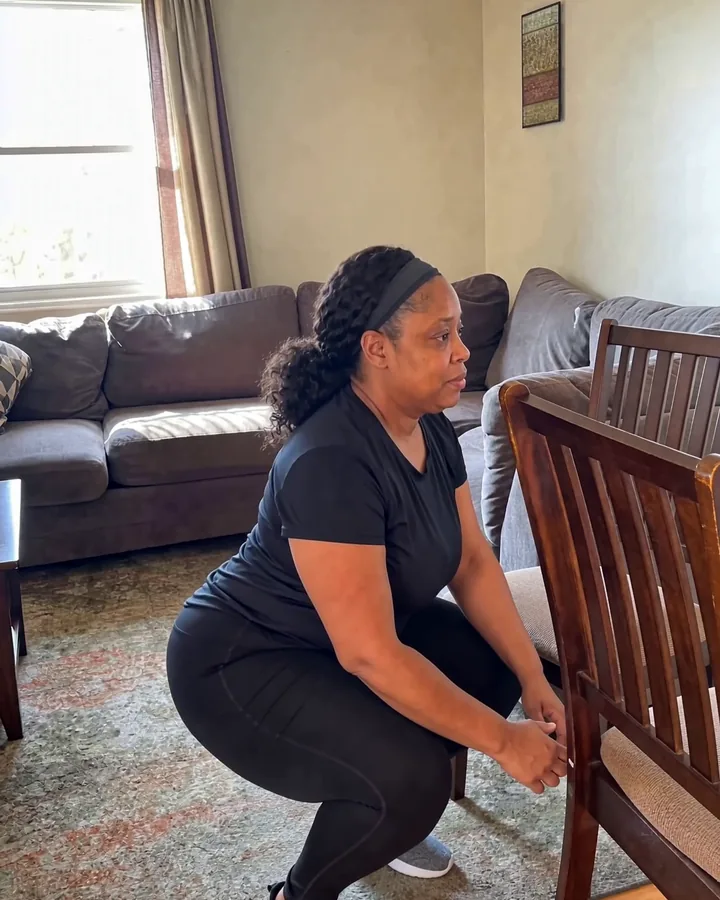
What a good rep looks like
- Depth. Hips travel back and down until the thighs are about parallel to the floor, or lower if you move well. The camera reads this as the knee closing to roughly a right angle.
- Knees. They track out over the toes on the way down and, more importantly, on the way up. Caving in on the drive up is the most common fault there is and the one most worth fixing.
- Chest. Some forward lean is normal, more on a low-bar or heavy squat. A chest that folds toward the floor turns the squat into a good morning and loads the back instead of the legs.
- Finish. Stand all the way up between reps. The rep counts when you are back at the top.
The three faults and what the coach says
Shallow depth
The knee never closed far enough. The rep still counts, but it did less than it could have. Common causes: tight ankles, a stance that is too narrow, or simply not trusting the bottom yet. A box or a chair behind you fixes the trust problem in a week.
The coach says: "Little deeper on the next one." · "Sit back into it, you've got more depth there." · "That one was shallow. Hips lower."
Knees caving in
On the way up, one or both knees drift toward each other. The camera sees the distance between the knees shrink against the distance between the ankles. It usually means the hips are not doing their share. "Spread the floor" with your feet and the knees follow.
The coach says: "Knees out. Push them over your toes." · "Watch the knees caving. Spread the floor." · "Drive the knees out as you stand."
Tipping forward
The trunk leans past the movement's tolerance, the chest drops and the hips shoot up first out of the bottom. Brace before you descend, keep the eyes level, and think about standing the chest up rather than the hips.
The coach says: "Chest up." · "You're tipping forward. Brace and stay tall." · "Keep the chest proud, eyes forward."
How to check yourself
- Film one set facing the camera, phone at knee height, 6 to 8 feet back, feet in frame. The filming guide covers the rest.
- Watch the knees on the way up, not down. That is where the cave shows.
- Pause the video at the bottom of the deepest rep and the shallowest rep. If they look different, your depth is inconsistent, which is the first thing to fix.
- If you want to see depth clearly, film a second set from the side at the same height. Depth is a side-view thing; knees are a front-view thing.
Variations the same rules cover
Bodyweight squat, goblet squat, box or chair squat, front squat, back squat. The weight changes how much lean is normal, not what the coach watches. If you are new, start with a chair behind you: the coach counts those too, and "sit back to the chair" is the easiest depth cue ever written.
How Loopform AI coaches it
Face the camera, feet in frame, and squat. The coach counts each rep as you stand up, reads depth from the knee angle, watches the knee distance against the ankle distance on the way up, and the trunk angle at the bottom. It says one cue per rep, out loud, mid-set, and says "that's eight" when the rep was clean. A shallow rep still counts; a fault is called once it has shown up for real, not on one noisy frame.
Rep counting and form cues are free, with or without a subscription. Video never leaves your phone unless you share a clip. Android arrives in January.